The first quarter of 2025 presents a mixed yet cautiously optimistic picture for Somaliland’s economic trajectory. Despite global uncertainty and domestic structural hurdles, the country is demonstrating signs of fiscal discipline, improved investment confidence, and early post-election economic stabilization. However, significant concerns remain, particularly regarding external inflows, financial intermediation, and project execution.
Macroeconomic Trends: Lower Inflation, Stable Currency
Headline inflation declined to 8.06%, down from 9.7% in Q1 2024 and slightly lower than Q4 2024’s 8.6%. This easing of inflationary pressure is mainly attributed to falling food and energy prices, as well as improved public confidence and stability following the 2024 presidential elections.
The Somaliland Shilling, though still under pressure, appreciated modestly due to currency stabilization measures by the Bank of Somaliland. The USD/SLSH exchange rate improved from 10,696 in Q4 2024 to 9,989 in Q1 2025. Measures such as halting USD mobile money transactions under $100 and suspending loans to civil servants contributed to this monetary improvement.
Public Finances: Revenue Exceeds Target, But Development Spending Lags
Domestic revenue collection stood at 650 billion SLSH, slightly surpassing the Q1 target by 0.3%. However, expenditure on government projects fell short, with only 74.2% of the General Government Fund being utilized.
Of particular concern is the performance of World Bank-funded projects, where only 29% of allocated funds were spent. Procurement delays and implementation bottlenecks continue to undermine the impact of donor-supported development programs. Notably, key projects like RAJO-KAAB registered zero execution during the quarter.
The underutilization of public development funds not only reduces the potential impact of donor resources but also limits the pace of public service delivery and infrastructure growth.
Financial Sector: Deposits Rise, Lending Contracts
Somaliland’s financial sector showed contrasting trends. Bank deposits increased by 37.3%, signaling growing trust in financial institutions and increased liquidity in the market. However, financing activity dropped sharply by 72.8%, which suggests either tighter lending practices or reduced borrower confidence.
This contraction in credit could hinder private sector expansion, particularly for small and medium enterprises that rely heavily on financing to grow.
Moreover, remittances, a vital pillar of Somaliland’s economy, plummeted by 50% in Q1 2025. The steep drop in both inflow and outflow remittances reflects regional and global macroeconomic headwinds, potentially affecting household income and local consumption.
Trade and Investment: Mixed Signals
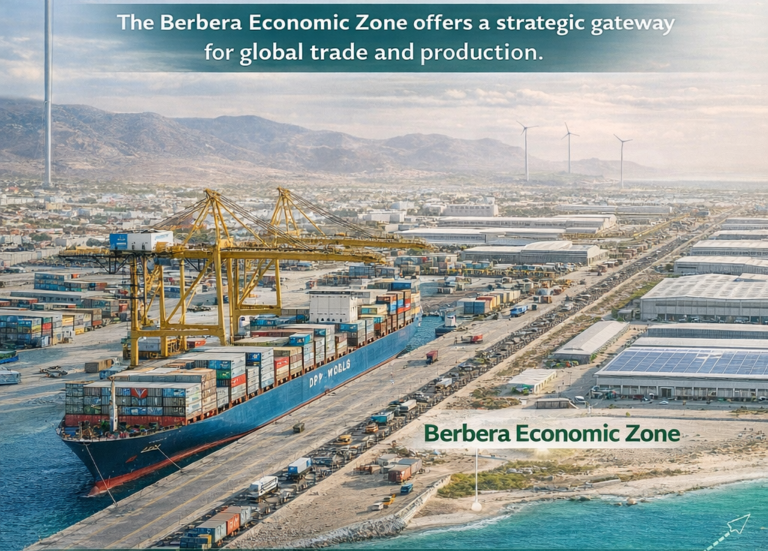
In the trade sector, Somaliland saw a 3% increase in livestock exports, driven by seasonal demand during the Hajj period. Imports rose by 17%, showing signs of recovery and increased consumer or investment demand. The Port of Berbera handled more containers (+26%) and vessels (+1%), indicating moderate growth in external trade logistics.
On the investment side, business registrations surged by 86%, while domestic investments grew by 245%—a significant vote of confidence in the local economy. Foreign investment also rose by 20%, with notable interest in industry, mining, and solar energy.
However, the construction sector remains sluggish. Cement imports dropped by 78%, pointing to a decline in large-scale building projects or a possible slowdown in public infrastructure expansion.
Tourism and Mobility: Modest Uptick
Tourism showed an 18% increase, with most visitors arriving from the U.S., Europe, and Kenya. The majority of tourists visited historical and cultural heritage sites such as Laas Geel. Passenger traffic by air increased by 4% for arrivals and 6.2% for departures, reflecting improved mobility and post-pandemic normalization.
Conclusion: A Cautious Outlook for 2025
Somaliland’s Q1 2025 performance reflects a nation navigating post-election recovery with a mix of prudence and unrealized potential. The decline in inflation, improved revenue collection, and increased domestic investment are encouraging. However, underperforming remittances, a tightening credit market, and execution gaps in development programs highlight underlying vulnerabilities.
To build on this momentum, policymakers must prioritize accelerating public investment implementation, enhancing financial access for businesses, and diversifying the economy beyond livestock and remittances. Only then can Somaliland achieve a more resilient and inclusive growth trajectory in the quarters ahead.
NB: Follow the below link to find the Economic Performance Bulletin First Quarter 2025:
https://slmof.org/reports/4e697fb1-d66c-4744-99dc-df834e2fd5bc