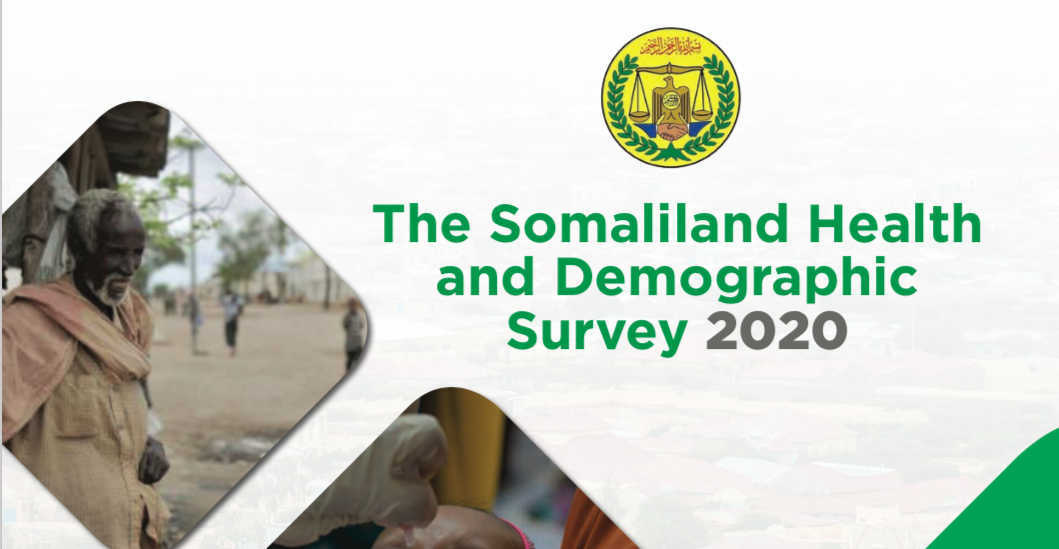
The Somaliland Health and Demographic Survey (SLHDS) 2020 provides one of the most comprehensive insights into the social and demographic realities of Somaliland. An analysis of the Social Affairs data reveals striking inequities and significant policy gaps that require urgent attention. This article examines six key areas: identity and civil registration, education and human capital, gender-based violence and harmful practices, women’s economic empowerment, basic services, and disability inclusion.
Identity and Civil Registration
The survey highlights a major gap in birth registration, with only 6.4 percent of children under five registered, and nomadic communities nearly excluded at 1.5 percent. Without legal identity, children face barriers in accessing education, healthcare, and legal protections. Current policies do not provide nomadic-friendly systems. Mobile CRVS teams tied to health services and late-registration amnesties are needed, alongside awareness campaigns linking birth certificates to school enrollment and social transfers.
Education and Human Capital
Literacy among women stands at 41 percent overall, but plummets to just 5 percent among nomadic women. School attendance is also low, with a primary net attendance ratio of 29.6, and almost non-existent (1.8) for nomadic children. Policy gaps are evident in access for nomadic and rural children, and in retention of girls. The government should pilot mobile
schools, provide bursaries for girls, and create re-entry opportunities for young mothers. Adult literacy programs, especially for women, must also be scaled up.
Gender-Based Violence and Harmful Practices
The SLHDS shows that 98 percent of women aged 15–49 have undergone FGM/C, while 12 percent reported experiencing physical violence since age 12. Only 22 percent of survivors sought help, mostly from family rather than institutions. These statistics expose gaps in legal frameworks, survivor services, and community support systems. Expanding one-stop GBV centers at regional hospitals, engaging religious leaders for norm change, and criminalizing severe forms of FGM/Care critical steps. Integration of GBV awareness into school curricula will also help shift social norms over time.
Women’s Economic Empowerment and Financial Inclusion
Only 9 percent of currently married women worked in the past year, and a mere 3 percent have and use a bank account. However, mobile penetration is high, with 76 percent of women owning a phone and 57 percent using it for payments. This points to a massive gap in access to formal finance. Policies should focus on scaling mobile-money onboarding, creating women-focused digital hubs for training, and incentivizing women-owned SMEs through procurement targets. Coupled with digital literacy programs, these interventions could transform women’s participation in the economy.
Basic Services: WASH and Energy
Access to safely managed sanitation stands at 31.6 percent, while only 20.1 percent of households have handwashing facilities with soap and water. Electricity access is at 50.3 percent overall but drops to just 22.4 percent in rural areas compared to 84.1 percent in urban centers. The urban–rural divide is stark. Immediate policies should prioritize
WASH infrastructure in schools, subsidized off-grid solar mini-grids for health posts, and clean-cooking solutions in peri-urban areas. These interventions will improve health outcomes and reduce the rural-urban service gap.
Disability Inclusion and Health Financing
Around 5 percent of Somaliland’s population is disabled, yet 42 percent received no care in the last year. Among households, 48 percent paid health costs out-of-pocket, highlighting weak financial protection. Policy gaps include the absence of community-based rehabilitation, lack of assistive technologies, and weak insurance mechanisms. Establishing disability grants, training community rehabilitation workers, and piloting community-based health insurance tied to mobile money platforms could significantly improve inclusivity and resilience.
Conclusion
The SLHDS 2020 provides clear evidence of social inequities across Somaliland. Urban bias, weak CRVS systems, poor access to education for nomadic populations, persistent harmful practices, and gender inequities remain key obstacles to national development. Evidence-based reforms must be prioritized, including mobile service delivery, investments in education and WASH, expansion of digital financial inclusion, and stronger legal frameworks against violence and FGM/C. A coordinated policy response built on SLHDS evidence has the potential to transform the lives of Somalilanders and accelerate progress
towards inclusive and sustainable development.
References
Central Statistics Department (CSD), Ministry of Planning and National Development (MoPND), & Ministry of Health Development (MoHD). (2020). Somaliland Health and Demographic Survey 2020. Hargeisa: Government of Somaliland.
Somaliland Ministry of Planning and National Development (MoPND). (2020). Somaliland Health and Demographic Survey 2020: Key Indicators Report. Hargeisa: Government of Somaliland.
United Nations Population Fund (UNFPA). (2020). Somaliland Health and Demographic Survey 2020 – Technical Support and Data Collection. Hargeisa: UNFPA.
United Nations Children’s Fund (UNICEF). (2021). Birth Registration and Identity Management in Somalia and Somaliland. Nairobi: UNICEF Eastern and Southern Africa Office.
World Health Organization (WHO). (2021). Disability and Health: Global Evidence and Practices. Geneva: WHO.
World Bank. (2020). Women, Business, and the Law 2020: Gender-Based Violence and Legal Frameworks in Fragile States. Washington, D.C.: World Bank Group.